
Practical Guide to WhatsApp Marketing Skills 2026: Leads, Bulk Messaging & Safety
Key Takeaways
- WhatsApp marketing works best as a two-step system: build targeted lead lists (e.g., from relevant groups) and then run personalized, trackable outreach at scale.
- Protect long-term deliverability by treating compliance and account safety as core operations: stable proxy/login location, policy-compliant content, new-account warm-up, and backups/exports of lead records.
WhatsApp marketing is the practice of using WhatsApp to reach prospects and customers, manage relationships, and drive conversions through fast, direct conversations.
For cross-border eCommerce and foreign trade teams, it fills the gap between traditional email outreach and real-time customer communication at scale.
What Is WhatsApp Marketing
Think about the messages you receive after a purchase: order confirmations, shipping updates, holiday promotion reminders, service appointment calls, and follow-ups that invite you to buy again.
Those are all marketing touchpoints; WhatsApp marketing simply delivers the same kinds of customer lifecycle messages through WhatsApp instead of SMS, email.
In day-to-day operations, WhatsApp marketing typically includes sending messages, tagging customers, managing customer lists, expanding new leads, and setting reminders for appointments, repurchase, and seasonal discounts.
Why WhatsApp Works for Marketing (Core Advantages)
WhatsApp is a mainstream messaging app in many regions—especially Southeast Asia, Russia, South America, and Africa—and it also holds significant market share in North America and Australia; in parts of East Asia, it faces stronger competition from apps like WeChat/QQ/Line.
User feedback shared on the page suggests customers prefer messaging WhatsApp business accounts over calls or emails for convenience, and it reports examples of higher ROI for WhatsApp broadcasts compared with email in specific tests.
Beyond campaigns, pairing WhatsApp marketing with WhatsApp CRM tools is positioned as a way to improve customer-management efficiency, reduce delays and churn, and reduce labor costs—if your workflows are set up correctly.
WhatsApp Marketing Skills (A Practical Two-Step Workflow)
A simple way to run WhatsApp marketing is: find the right audience → reach them with scalable, personalized messages.
To support these two steps, this page highlights two tool types: a lead discovery tool (for WhatsApp groups) and a bulk messaging tool (for outreach).
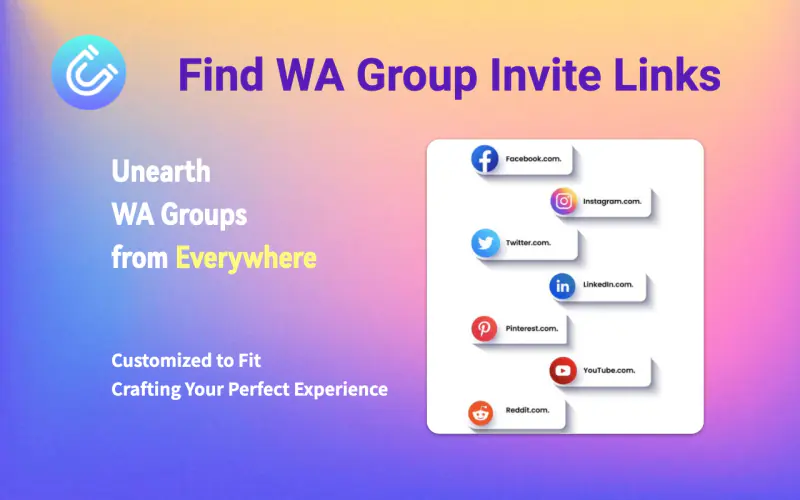
Skill 1: Prospecting With WhatsApp Group Link Scraper (Lead Discovery)
Step 1 is prospecting: enter a keyword and a target site, then automatically scrape large numbers of WhatsApp group links to identify groups and capture member phone numbers as leads.
The value proposition is speed and accuracy—saving time, reducing wrong-number collection, and turning each newly found group into hundreds of potential leads.
Skill 2: Sending Bulk Messages With Personalization (Outreach)
Step 2 is outreach: send promotional messages to each potential user with WhatsApp Sender, customized bulk sending to quickly connect with large numbers of unfamiliar contacts.
This approach is presented as running on top of WhatsApp Web, enabling multi-account handling and visibility into multiple accounts' activity.

Key features described include:
- Pre-set content for automated sending at scale.
- Custom templates with variables for personalization (to diversify content and improve account safety).
- Excel import for bulk phone number uploads.
- 1:1 messaging to all members of a WhatsApp group without adding them as contacts first.
- Attachments supported (images, videos, files).
- Randomized sending intervals to reduce detection risk.
- Live progress tracking, result reporting, and exportable statistics.
- Pause/resume during the sending process.
- Bulk sending of WhatsApp contact cards to grow your friend list faster.
WhatsApp Marketing Results (Real Campaign Examples)
Example 1
Unilever promoted a new laundry product line by placing posters with a WhatsApp number; once people messaged, a WhatsApp chatbot shared clothing-care tips and introduced the new products.
At the end of the interaction, users could receive a 50% discount and free delivery, and the page reports 290,000 messages sent/received and a 14× sales increase during the campaign period.
Example 2
Hellmann's "WhatsCook" asked users to register a WhatsApp number, then a real chef requested a photo of the ingredients in their fridge and sent matching recipes, including step-by-step images and videos.
The page reports the campaign reached more than 5 million people and achieved a 50% website registration rate.
Example 3
Dior Beauty collaborated with Jisoo (BLACKPINK) and ran a WhatsApp activation that opened an exclusive WhatsApp chat group for Instagram fans; after registration, fans could access exclusive content and chat with a chatbot.
The page frames this as a luxury beauty brand experimenting with WhatsApp creative marketing, with multi-format content supported (images, video, files, links, audio).

WhatsApp Marketing Precautions (Compliance + Account Safety)
To run WhatsApp marketing safely and sustainably, focus on four areas: network stability, policy compliance, new-account warm-up, and message communication templates.
Network & Login Location Stability
If you operate from regions with network restrictions, prepare a stable proxy node before running WhatsApp marketing so WhatsApp can connect reliably.
Avoid frequent changes to each account's login location; repeated location switching can increase the risk of account restriction or bans.
Follow WhatsApp Rules and Local Laws (Content Compliance)
Follow platform rules and applicable laws, and align with WhatsApp's Terms of Service on prohibited activities.
The original article lists examples of prohibited content shared via status, profile photo, or messages, including illegal, obscene, defamatory, threatening, intimidating, harassing, hateful, racially abusive, or content that encourages illegal/improper behavior or otherwise violates the terms; violations can lead to account disabling.
Before sharing any content, think carefully about whether it is compliant and whether you truly want to share it with contacts; during WhatsApp marketing, make sure your message does not offend others.
Warm-Up New Accounts
The post recommends warming up new WhatsApp accounts with normal human behaviors (adding contacts, chatting, joining groups) for at least 1–2 weeks before doing bulk or high-volume marketing activity.
This is presented as a practical way to lower the risk of being flagged or banned when scaling outreach.
Messaging Skills and Template Logic (What to Say and How to Format)
The first sentence is the most important; start with a greeting such as "Dear XXX."
While the opener can mention many topics (weather, local festivals, culture, or industry news), it recommends prioritizing two principles: talk about the customer, and talk about what the customer cares about.
In the second sentence, once you've gained attention, move immediately to the main point—introduce who you are, state your purpose clearly, and summarize your product/service in a compelling way that matches the prospect's needs.
If the user shows interest, continue with a concise "Why Choose Us" introduction: acknowledge competition and differentiate yourself in the shortest possible way to create a strong impression.
Then provide a simple list of basics (example from the article: jewelry materials such as crystals and sterling silver 925, monthly new styles, and certifications such as Swarovski Licence).
Use ALL CAPS to highlight key items you want readers to notice quickly (e.g., brand name or core advantages).
FAQ
What is WhatsApp marketing?
WhatsApp marketing is using WhatsApp to message prospects and customers for lifecycle communication—customer tagging and management, lead expansion, appointment reminders, repurchase reminders, and holiday discount notifications.
Why use WhatsApp instead of email or phone calls for cross-border sales?
For overseas sales (cross-border eCommerce and foreign trade), WhatsApp is positioned as a more convenient channel for customers than calls or emails, and the page reports higher broadcast ROI than email in user feedback examples.
What's a simple workflow to run WhatsApp marketing?
A practical workflow is: find qualified prospects first (e.g., via WhatsApp group link discovery) and then send personalized outreach messages in bulk with controlled pacing and tracking.
How do I send bulk WhatsApp messages more safely?
Use template variables for personalization (to diversify content), add randomized sending intervals, and track progress/results with exportable reports; the page also describes multi-account operations on WhatsApp Web.
What precautions reduce the risk of bans or restrictions?
Keep network access stable (including a stable proxy if needed), avoid frequent login-location changes per account, follow content rules and laws, and warm up new accounts with normal human activity for at least 1–2 weeks before bulk actions.
Should I back up leads and outreach records?
Yes, export contacted (or successfully contacted) customer lists to back up outreach progress (e.g., using a Chrome extension like WA Contacts Extractor), and consider applying tags before export to avoid re-tagging later.